



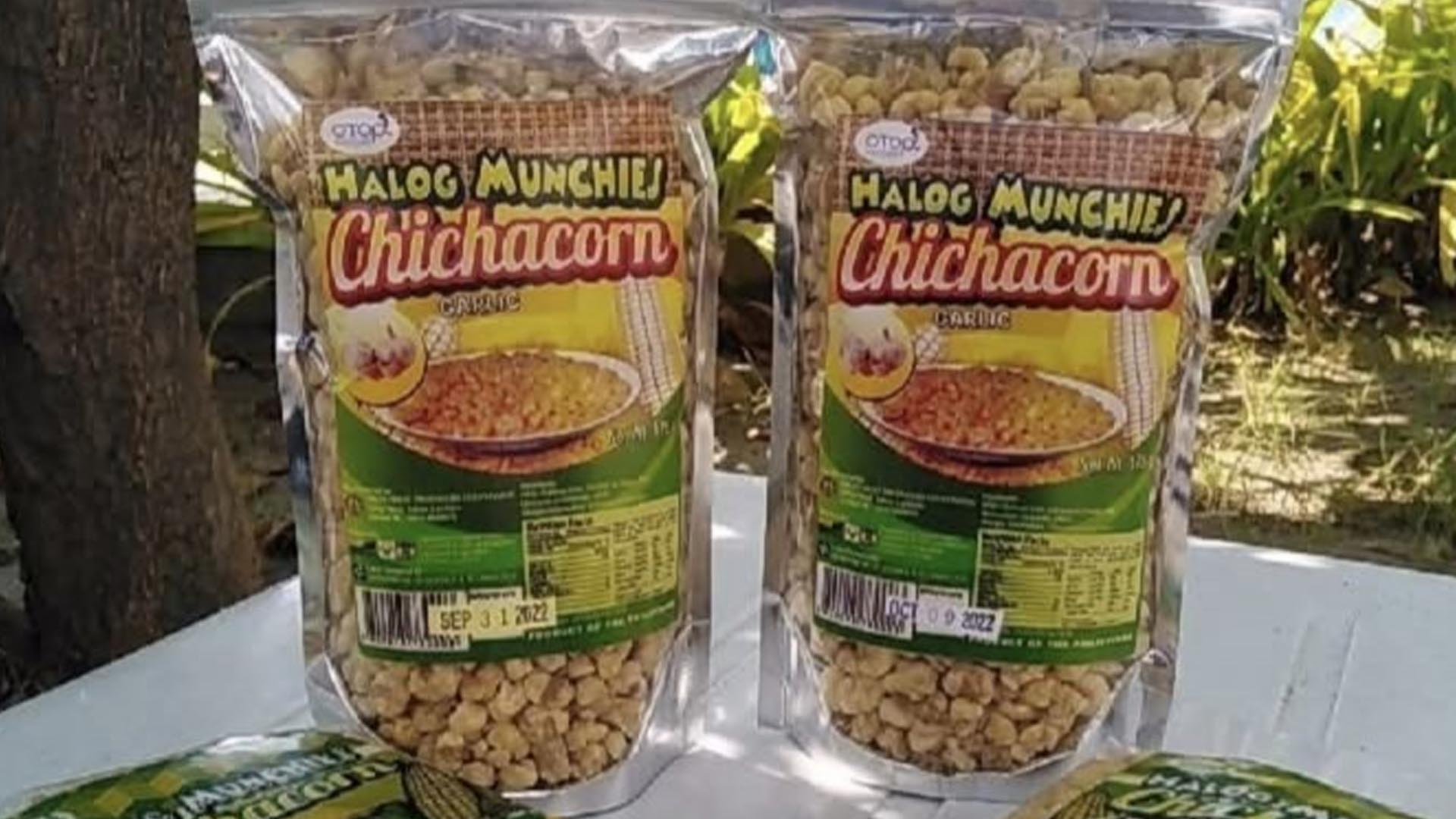






The Halog West Producers Cooperative in Tubao, La Union, has addressed losses from pests on its white corn crops by producing chichacorn (crunchy white corn snack), which has since become an additional source of income.
Vanessa Mapalo, the cooperative’s secretary and a member, said in an interview Friday that their group of 172 members — mostly farmers and their families — has been producing the crunchy white corn snack since 2009.
“Tubao is abundant with white corn crop and they decided to make the chichacorn since most of their produce encountered losses due to pests or worms,” she said, quoting her statement in Filipino.
The cooperative initially operated as a grocery shop but opted to become a producer with assistance and training from the local and provincial governments, and national agencies such as the Department of Trade and Industry, the Department of Agriculture and the Department of Agrarian Reform (DAR).
“The members benchmarked in a chichacorn production and were encouraged to do the same,” she said.
In 2014, the cooperative received its Food and Drug Administration license to operate and distribute the product.
Mapalo said the group has grown from a microentrepreneur to a small entrepreneur and hopes to upgrade to a medium entrepreneur in the coming years.
“Our cooperative earned over PHP1.4 million gross income from the chichacorn production alone,” she said.
The group’s clients include Pasalubong Centers and online buyers. She added that they have been joining trade fairs to showcase their product to a wider market.
The members produced 8.5 tons of white corn last year, and over five tons was made into the chichacorn snack, she added.
Mapalo said they have their own processing center with equipment, which was established through the local government unit and DAR, and the cooperative’s 20 percent equity.
“We are perfecting making banana chips to add to our products and flower decoration for the corn leaves,” Mapalo said. (PNA)