




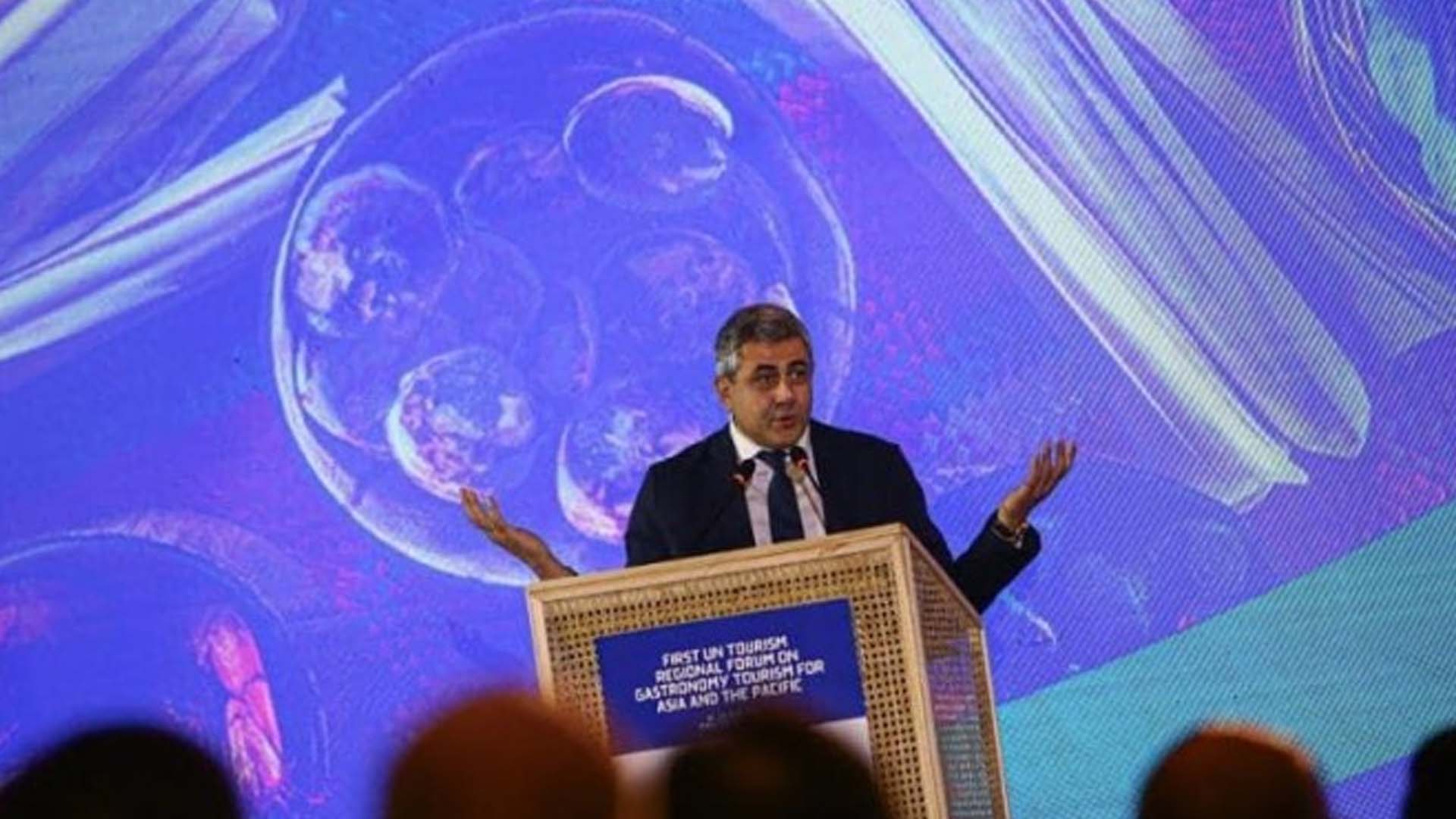






United Nations Tourism Secretary-General Zurab Polikashvili has proposed the establishment of a gastronomy education center in Cebu as the country successfully hosts the first UN food tourism forum in Asia.
Polikashvili said this can serve as a legacy of the inaugural UN Tourism Regional Gastronomy Tourism Forum in Asia and the Pacific which gathered more than 500 delegates at Shangri-La Mactan on June 26.
“We know that education is the top priority for your tourism key player and we all will support this initiative to have the presence of UN Tourism if you would support this idea,” he said.
He said the UN Tourism is also ready to provide the Philippines guidance in creating more jobs by building new business concepts such as the development of gastronomy tourism as an economic driver.
Speaking to the press, Polikashvili said Filipino cuisine requires further promotion as it can be considered niche compared to other globally popular dishes.
“Let’s say you will find Japanese, Chinese, Thai restaurants but (for) Filipinos there is a niche,” he said.
“I see a lot of opportunities to promote via cuisine tourism and the Philippines because the best ambassadors are restaurants and chefs,” he added.
Tourism Secretary Christina Frasco said the Philippines is “very open” to discussions about the proposed center, especially as the DOT is working to craft a five-year national gastronomy tourism strategy.
“We have the support of the national government and importantly we have the support of those that will help us in the flourishing of this academy – our chefs,” she said.
In the Philippines, Frasco said food tourism is a growing and dynamic sector and recognized its “enormous potential for economic growth and advancement and cultural exchange among nations”.
“Filipino cuisine is a diverse tapestry of flavors, reflecting regional characteristics from across our beautiful archipelago of 7,641 islands. From the globally renowned Cebu lechon, and the comforting tastes of adobo and sinigang, to Mindanao’s distinctive dishes like curacha and pastil, our culinary heritage is rich and varied,” she said.
“Through our food, we tell the story of the Filipinos. We narrate the victories of our people, our homeland, our history,” she said.
The Basque Culinary Center (BCC) Director of Masters and Courses Idoia Calleja said the BCC is also open to collaborating should the proposal come into fruition.
“We’ll be very happy to share our vision of education in gastronomy and with the Philippine center. What is important is to elevate the level of chefs’ ability to work with a lot of sectors and to promote gastronomy,” she said.
“Gastronomy is also about health, about science, it’s also about sustainability, and food waste. I think there’s a lot in what we’re doing so we will be very pleased to collaborate in this new center if it comes into reality,” she said. (PNA)