



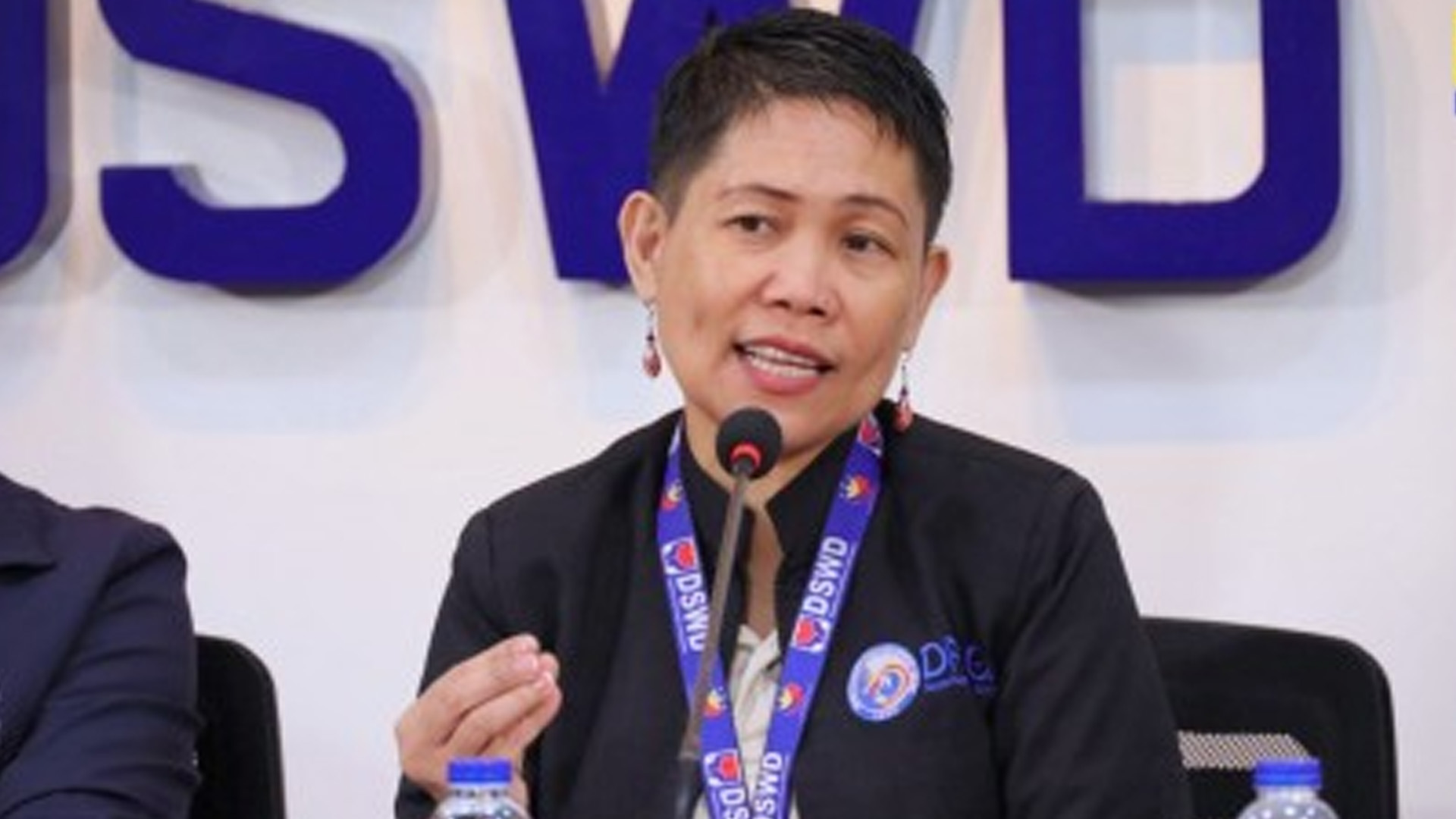






An official of the Department of Social Welfare and Development (DSWD) on Thursday highlighted the accomplishments and expanded targets of Project Local Adaptation to Water Access (LAWA) and Breaking Insufficiency through Nutritious Harvest for the Impoverished (BINHI) as it continues to provide food, water and livelihood interventions for communities affected by the dry spell, particularly in Cagayan and Isabela.
In a media forum at the DSWD Central Office, Director Isabel Lanada of the DSWD’s Disaster Response Management Bureau (DRMB) presented the program’s accomplishments from 2023 to 2025, as well as its expanded implementation targets for 2026.
She said the LAWA at BINHI programs was conceptualized under the directive of Secretary Rex Gatchalian to ensure long-term food and water security for vulnerable communities, especially those affected by droughts and other climate-related hazards.
Lanada emphasized that the program goes beyond providing temporary aid, aiming to strengthen the resilience and capacity of vulnerable communities.
Under the LAWA component, communities are assisted in building small farm reservoirs, irrigation facilities and the rehabilitation of waterways.
From 2023 to 2025, the DSWD has successfully established 3,614 LAWA sites nationwide, including 1,650 in Luzon, 721 in Visayas, and 1,243 in Mindanao.
This resulted in the harvesting of 2,092,200 kilograms of aquatic resources and 831.30 kilograms of kangkong (water spinach) during the period.
For BINHI, a total of 6,440 sites, comprising communal vegetable gardens and root crop farms, were established, with 3,875 in Luzon, 1,159 in the Visayas and 1,406 in Mindanao.
A total of 1,909.77 hectares has been cultivated under the project, resulting in the harvest of 35,234,362 kilos of crops and produce.
“Kung ang mga kababayan natin ay may alternative source of water and food, hindi po yan aalis sa kanilang mga lugar at pagyayamanin nila, ay hindi po sila makakaranas ng gutom, hindi po sila mapipilay in terms of economic needs nila (If the people have an alternative source of water and food, they will not leave their places, and they will sustain it. They will not go hungry, they will not be crippled in terms of economic nerds),” Lanada said.
For 2026, the DSWD is targeting the implementation of the programs across 2,549 barangays in 450 municipalities, covering 71 provinces and all 17 regions nationwide.
This aims to assist 119,780 beneficiaries through a combined funding support of PHP1.9 billion in grants, PHP250 million in donations, and PHP261 million from the Department of Labor and Employment’s Tulong Panghanapbuhay sa Ating Disadvantaged/Displaced Workers program.
Meanwhile, the DSWD-DRMB continues to provide Emergency Cash Transfer (ECT) assistance to families affected by the dry spell conditions in the Cagayan Valley Region.
As of the latest monitoring, 35,444 families in Isabela and 31,782 families in Cagayan have been affected by the extreme conditions.
In response, the DSWD has already released PHP358.87 million worth of ECT for affected families in Isabela and PHP321.79 million for those affected in Cagayan. (PNA)