









Philippine export tariffs to the United States remain unchanged despite recent policy shifts, Department of Trade (DTI) Secretary Ma. Cristina Roque said Tuesday.
On Feb. 20, the US Supreme Court ruled that President Donald Trump exceeded his authority in imposing tariffs under the International Emergency Economic Powers Act (IEEPA).
Before the ruling, Philippine exports faced a 19-percent tariff, with some agricultural products exempted, effective Aug. 7, 2025.
Hours after the decision, Trump announced a 10-percent global tariff to replace the voided policy, then raised it to 15 percent the next day.
Roque said Philippine export levies remain at pre-ruling levels as talks continue with US counterparts.
“They’re still in talks. That’s the word exactly,” she said, declining to predict future rates. “It’s hard to make assumptions now.”
Roque also said they have not reached out to their US counterparts regarding the new tariff policies.
“Continuous kasi ang usapan (The talks are continuous). So there’s no need to reach out,” she told reporters on the sidelines of the ASEAN editors and economic opinion leaders forum in Makati City.
ASEAN-focused programs
At the forum, Roque said Philippine exports grew 15.2 percent in 2025 to a record USD84.41 billion. The country expanded its free trade agreements to 20 partners and boosted micro, small and medium enterprises (MSMEs) sales in the National Capital Region by 210 percent to PHP668 million.
“As ASEAN Chair, we believe this success story should not remain national — it should be regional,” she said.
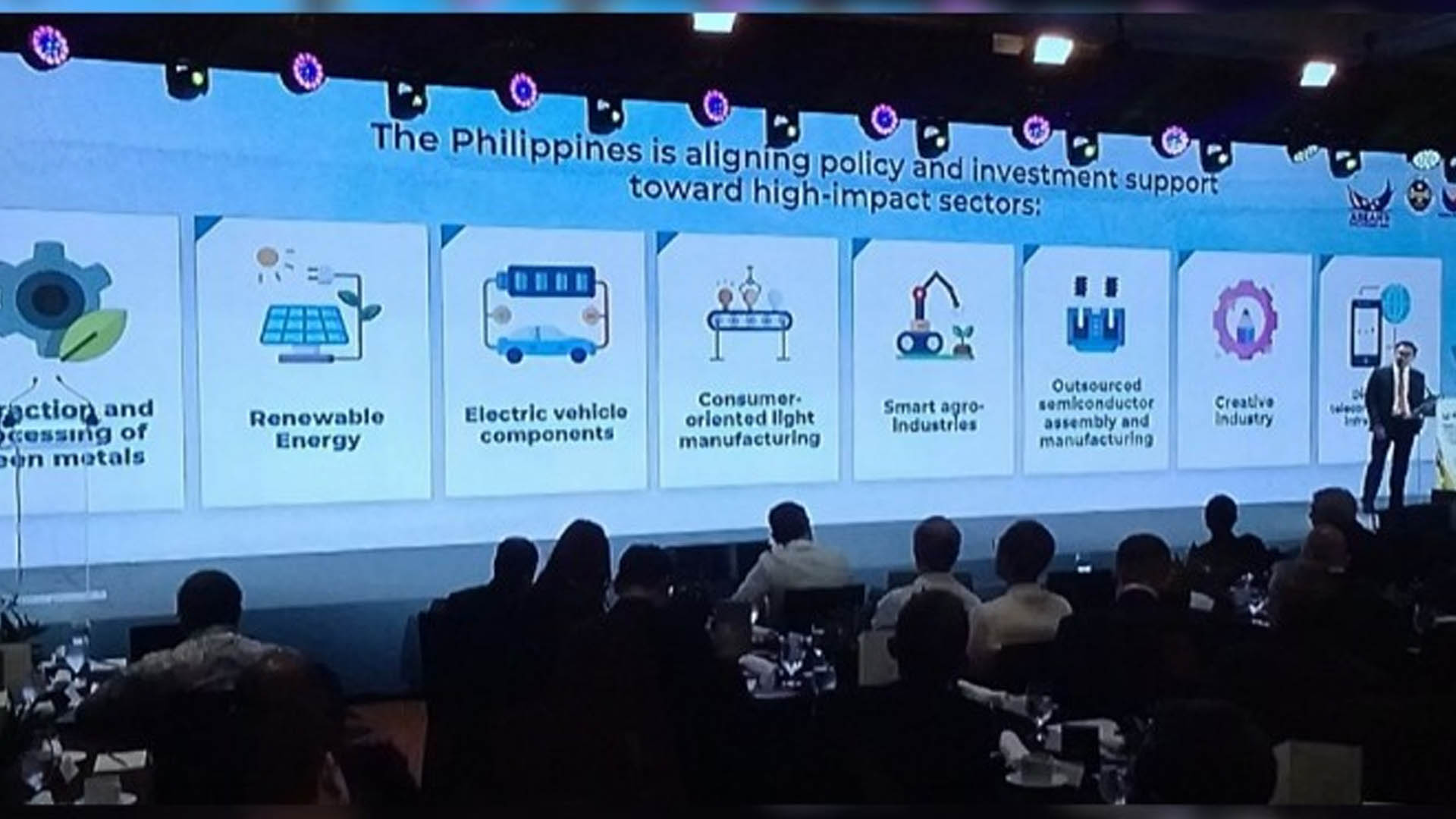
She said the Philippines will prioritize digitalization and artificial intelligence through the ASEAN Digital Economy Framework Agreement, semiconductor and critical minerals development, renewable energy, cross-border digital talent mobility, MSME growth, and healthcare innovation.
Priorities
Finance Secretary Frederick Go, for his part, said the Philippines will pursue three priorities: peace and security, prosperity corridors, and people empowerment.
“Within this regional framework, the Philippines aims not only to benefit from ASEAN investment flows but to serve as a working model for how sound policy, investment facilitation, strong public-private partnerships can translate into measurable outcomes, competitive returns, and long-term prosperity,” he said.
Go noted that “across ASEAN, competition for quality investment has intensified and investors increasingly compare destinations based on execution capacity, not just policy announcements.”
He said the 11-member bloc “stands as one of the world’s most attractive multi-market investment destinations, offering scale, diversity, and supply chain depth.”
“The Philippines brings together a reform-driven policy environment and steadily improving ease-of-doing business conditions,” he said.
“We invite partners to advance not only with the Philippines but with ASEAN as a region through stronger collaboration and long-term investment partnerships. Together, we can ensure that regional cooperation delivers concrete growth and that opportunity translates into shared prosperity,” he added. (PNA)